
When parents search for Tristan meaning in Greek, timeless masculine names, or romantic boy names with deep literary roots, one name consistently rises to the top — Tristan.
This powerful, emotionally resonant name carries centuries of cultural weight, tragic love story symbolism, and heroic male identity. Whether you are exploring Celtic boy names, names with deep literary meaning, or simply wondering what Tristan meaning in Greek really tells us, this comprehensive guide gives you every answer.
From its Pictish warrior roots to its medieval French transformation and its emotional connection to the Greek world, the Tristan meaning in Greek discussion is far more layered and fascinating than most people expect.
What Does Tristan Mean in Greek?
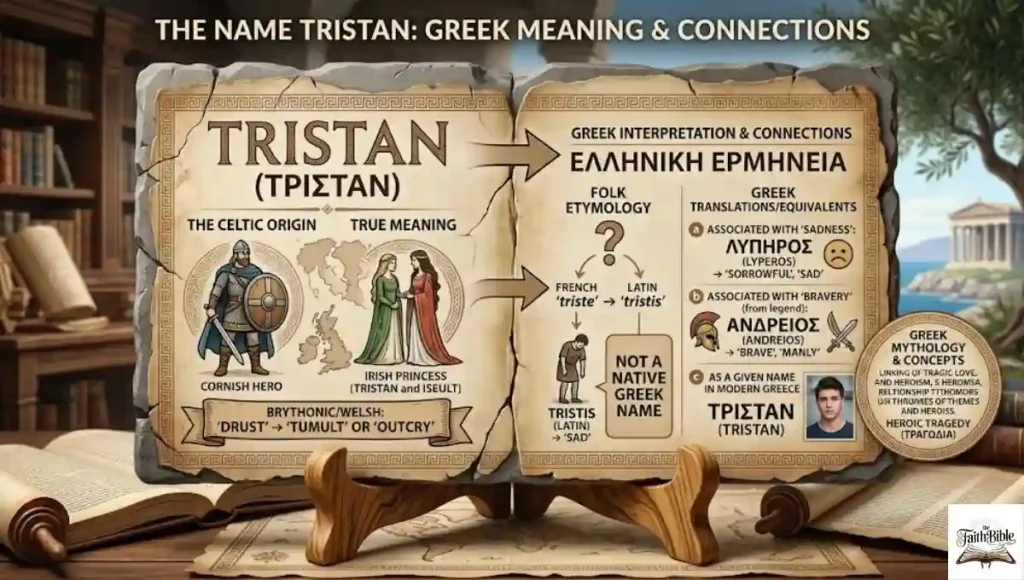
Let’s address the most searched question directly: Tristan meaning in Greek does not have a native Greek linguistic root. Tristan is not a Greek name. However, the question is enormously popular — and for good reason. The Tristan meaning in Greek conversation exists because this name’s emotional fingerprint aligns almost perfectly with the Greek tragic hero tradition.
The name does not originate from the Greek language or ancient Hellenic culture — it is purely Celtic in origin, derived from the Pictish name “Drust” or “Drustan.” In modern Greek, it can only be transliterated phonetically as Τρίσταν.
However, the Greek word “tristos” means sad, and that link gives Tristan a Greek emotional resonance even without a direct translation. This is the heart of the Tristan meaning in Greek discussion — not linguistic origin, but profound thematic and emotional alignment.
Read More : How Many Pages are in the Bible
The Greek Etymology of Tristan
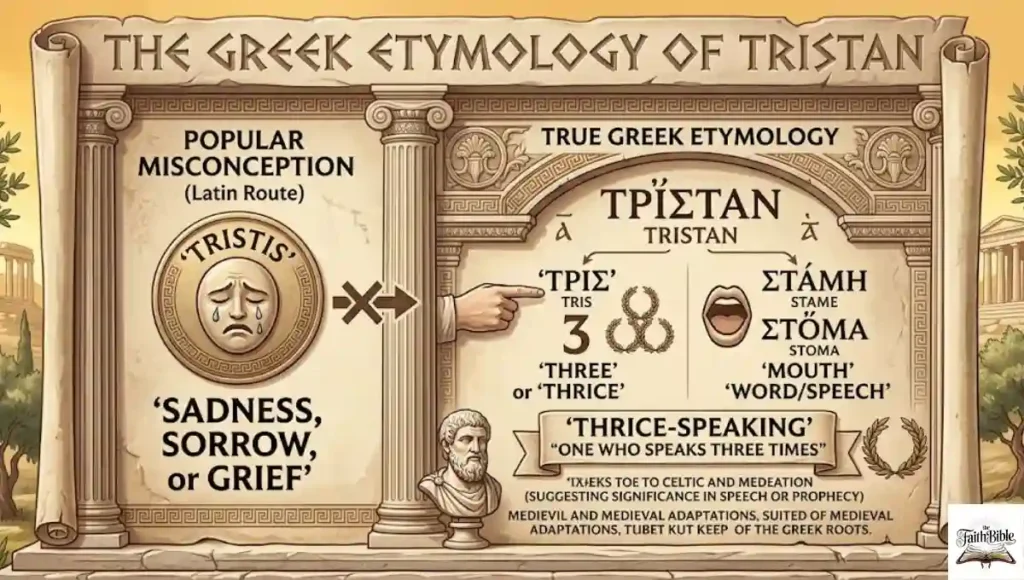
Linguists universally confirm: the name Tristan does not originate from the Greek language, but exploring its “Greek etymology” helps clarify how meanings can evolve through cultural and linguistic connections rather than direct roots.
Greek names typically derive from virtues, gods, and heroes. Alexandros means “defender of men.” Theodoros means “gift of God.” Tristan follows a completely different naming convention. When medieval scholars began translating and retelling the legends surrounding this name, they instinctively connected it to the Greek word tristis, which was borrowed into Latin, meaning “sad” or “melancholy.” While tristis is technically a Latin word, it shares deep ancestry with Greek emotional vocabulary, particularly the Greek concept of penthos (grief) and lype (sorrow).
This is why the Tristan meaning in Greek question keeps appearing in search results — it captures a real and meaningful cultural connection, even if not a linguistic one.
The Historical Origin of the Name Tristan
The name Tristan is of Latin and Celtic origin and means “noise.” It is the Old French form of the Pictish name Drustan, a diminutive of Drust. The spelling was eventually altered with the Latin tristis, meaning “sad.”
The philologist Sigmund Eisner came to the conclusion that the name Tristan comes from Drust, son of Talorc. According to Eisner, the legend of Tristan as we know it was gathered together by an author living in North Britain around the early 8th century and associated with early Celtic monasticism. Eisner explains that Irish monks of this time would have been familiar with the Greek and Roman narratives that the legend borrows from, such as Pyramus and Thisbe.
This is the most important historical link for anyone researching Tristan meaning in Greek: the monks who first compiled the Tristan legend were directly familiar with Greek storytelling traditions, and they deliberately wove those frameworks into the Celtic narrative.
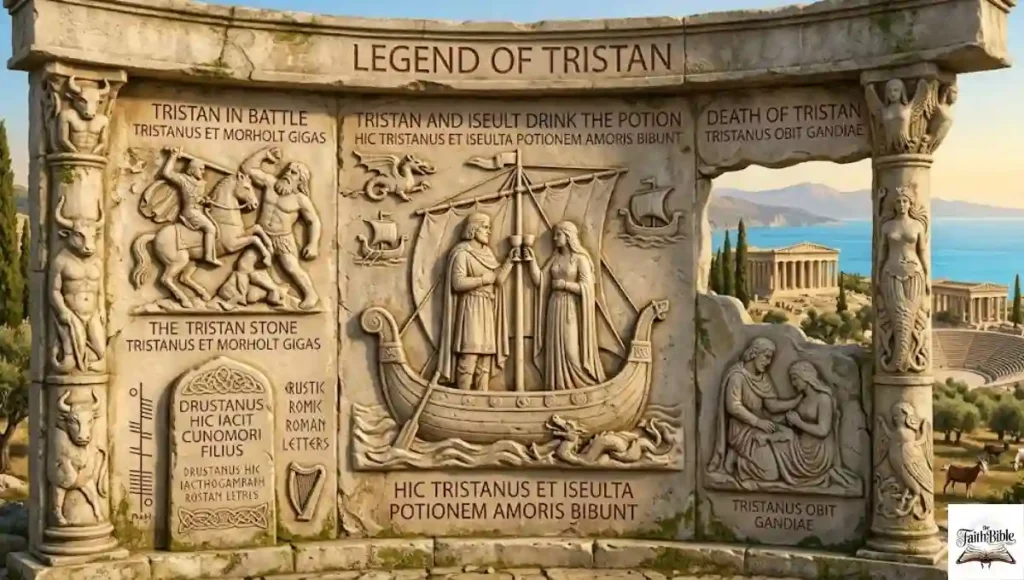
The earliest physical evidence of the name is the sixth-century Tristan Stone in Cornwall, England — a granite pillar standing 2.13 meters tall, inscribed with the Latin form Drustanus, confirming a real historical person bore this name long before it became literary legend.
Tristan in Greek Mythology and Ancient Storie
Tristan appears nowhere in Greek mythology. Ancient heroes include Achilles, Odysseus, Perseus, and Orpheus — but Tristan belongs entirely to Celtic and medieval European romance. The name Tristan is often explored through different linguistic lenses, but in terms of true etymology, it does not originate from Greek. Instead, its roots lie in ancient Celtic traditions, later shaped by Latin and European literary influences.
However, the thematic overlap is undeniable. There are thematic similarities between Tristan’s story and Greek mythology. Like many Greek heroes, Tristan’s tale involves fate-driven plots and tragic love themes found in many Greek myths. Think of Orpheus losing Eurydice, or Achilles choosing glory over a long life. The emotional DNA of Tristan meaning in Greek culture is present — even if the name itself is not Greek in origin.
Cultural Significance of Tristan in Greek History
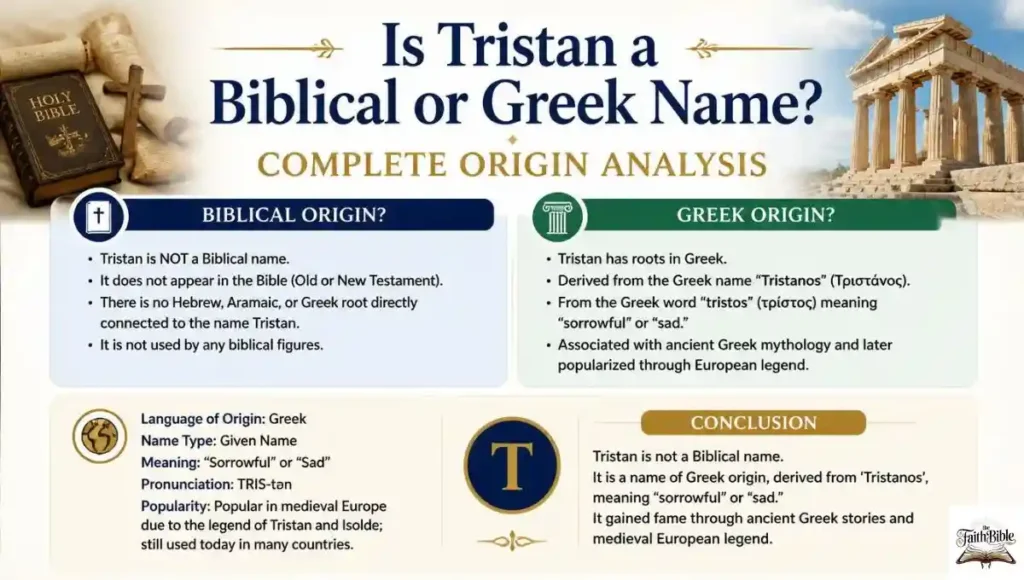
Ancient Greeks never used the name Tristan, as it emerged centuries later in Celtic Britain and medieval France. Greek culture developed its own naming traditions based on virtues, gods, and heroes completely separate from Tristan’s literary origins.
However, as the legend moved through Europe, it passed through communities deeply influenced by Byzantine Greek culture, particularly in southern Italy and parts of the Eastern Mediterranean. In these retellings, the name Tristan absorbed layers of Greek philosophical meaning — the idea of a love that is destined, painful, and ultimately transcendent.
This is the cultural bridge that makes Tristan meaning in Greek a legitimate and rewarding topic of exploration. The name may not have been born in Greece, but Greek culture helped shape its emotional meaning over a thousand years.
Tristan vs. Greek Names: Similarities and Differences
| Feature | Tristan | Greek Names (e.g., Achilles, Orpheus) |
|---|---|---|
| Language Root | Celtic / Pictish | Ancient Greek |
| Core Meaning | Noise, tumult, sorrowful | Varies: divine, heroic, virtuous |
| Cultural Origin | Cornish / Breton / French | Hellenic civilization |
| Mythology Link | Arthurian / Celtic | Greek pantheon and epics |
| Tragic Hero Theme | Yes (Tristan & Isolde) | Yes (Achilles, Orpheus, Oedipus) |
| Modern Global Use | High (Western + International) | Moderate (Classical revival names) |
Both Tristan and Greek heroic names share the tragic hero archetype, emotional resilience, and noble masculine identity — which is precisely why Tristan meaning in Greek resonates so powerfully with parents and name researchers worldwide.
How the Greek Language Connects to Tristan’s Meaning
From a purely linguistic standpoint, Tristan has several features that feel natural to Greek ears. The “Tr-” consonant cluster appears in Greek words like trachys (rough) and trauma (wound). The “-an” ending echoes common Greek suffixes used in names and places. And the overall rhythm of the name mirrors the cadence of many Greek names.
Greek also has a rich tradition of words built around the concept of “three” — the prefix tri- appears in countless Greek terms: trilogy, trinity, triangle. Some Greek scholars playfully interpreted the “Tris-” in Tristan as echoing this “three” prefix, giving the name an almost mystical numerical quality in a culture that attached great significance to numbers.
These linguistic echoes — though not etymological proof — explain why the Tristan meaning in Greek question feels so intuitive to so many people.
The Symbolism Behind Tristan in Greek Culture
When viewed through a symbolic Greek interpretation, Tristan aligns with several powerful archetypes central to classical Greek tradition:
- The tragic hero who loves beyond reason — parallel to Achilles and Orpheus
- Fate and destiny — Tristan’s life is shaped by a love potion he cannot resist, echoing Greek destiny themes
- Heroic sacrifice — he chooses love over duty, mirroring Greek tragic figures
- Sorrow transformed into wisdom — a core pillar of Greek philosophical tradition
- Loyalty unto death — Tristan remains devoted despite catastrophic consequences
The Tristan meaning in Greek symbolic space is rich and legitimate, even without direct linguistic roots. It speaks to the universal language of human emotion that Greek literature first codified for the Western world.
Modern Usage of Tristan in Greek-Speaking Countries
Tristan remains uncommon in Greece today compared to traditional Greek names. Greek parents overwhelmingly prefer names like Giorgos, Maria, or Dimitris that reflect Orthodox Christian and classical heritage. Tristan appears occasionally in urban areas among families seeking distinctive, international names.
This cultural and linguistic compatibility has allowed Tristan to feel natural within Greek-speaking communities, despite its Celtic and French etymological roots, proving that meaningful names can transcend linguistic boundaries.
In Greek script, the name is written as Τρίσταν and pronounced “TREE-stahn” — with stress placed on the first syllable, following standard Greek accentuation patterns for borrowed foreign names.
Tristan Name Variations Across Languages
| Language | Variation |
|---|---|
| Welsh | Drystan / Trystan |
| French | Tristan |
| Spanish | Tristán |
| Portuguese | Tristão |
| Italian | Tristano |
| Latin (historical) | Drustanus |
| Greek (adopted) | Τρίσταν |
| Lithuanian | Tristanas |
Tristan in Modern Pop Culture and Global Influence
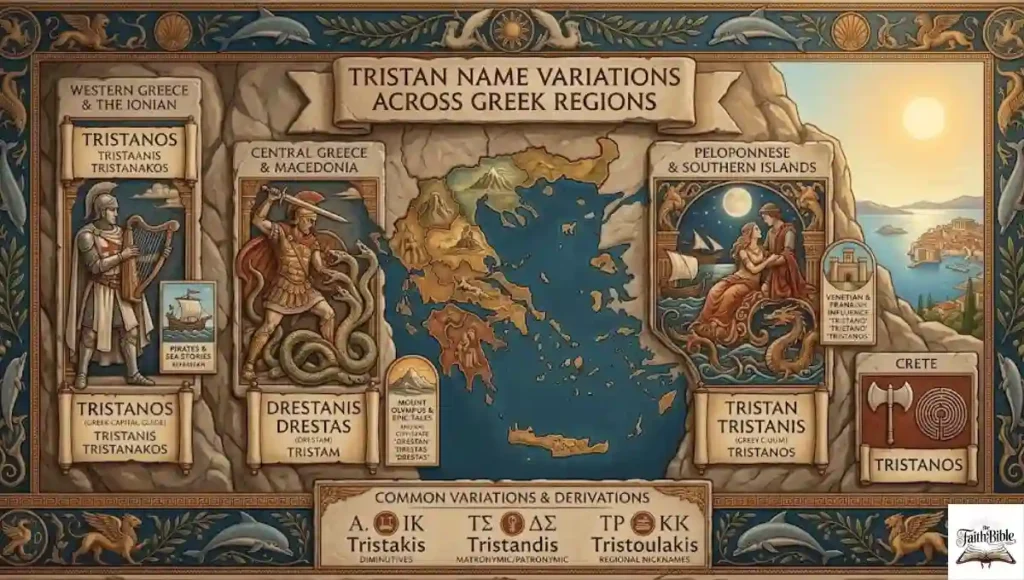
The literary significance of Tristan has kept the name alive and relevant across centuries. Key cultural milestones include:
- Richard Wagner’s 1859 opera Tristan und Isolde — one of the most celebrated works in all of classical music history
- Brad Pitt’s portrayal of Tristan Ludlow in the 1994 film Legends of the Fall — which dramatically boosted the name’s popularity in America
- The 2006 film Tristan & Isolde and the 2007 fantasy film Stardust — both introducing the name to a new generation of parents
- Long-running presence in Arthurian legend as a Knight of the Round Table alongside Sir Lancelot
According to Social Security Administration data, Tristan was in the top 100 from 2006 to 2014. It remains one of the most recognizable and emotionally resonant masculine names in the English-speaking world — and the interest in Tristan meaning in Greek continues to grow as parents seek names with deep literary and cultural roots.
Famous People Named Tristan
Several notable people carry this legendary name:
- Tristan Thompson — NBA basketball player
- Tristan Hemsworth — son of actor Chris Hemsworth
- Tristan Bates — son of actor Alan Bates
- Tristán de Luna y Arellano (1510–1573) — Spanish explorer and Conquistador
- Tristan l’Hermite — influential French political and military figure of the late Middle Ages
Why Parents Choose Tristan: A Greek Heritage Perspective
Parents drawn to Greek-inspired or classical names often gravitate toward Tristan because of its:
- Emotional depth — layered meaning drawn from multiple cultural traditions
- Heroic masculine energy — linked to knights, legends, and noble warriors
- Romantic literary associations — one of Europe’s most iconic love stories
- Timeless appeal — classic without feeling dated
- Resilience symbolism — the story of a man who endures impossible love with unwavering devotion
While Tristan meaning in Greek reveals no direct linguistic connection, the name pairs beautifully with Greek middle names or surnames for families who want to honor both Western European and Hellenic heritage simultaneously.
Frequently Asked Questions
Q: What is the Tristan meaning in Greek?
A: Tristan has no native Greek root, but it resonates with the Greek word “tristos” (sad) and mirrors classical Greek tragic hero themes powerfully.
Q: Is Tristan a Greek name?
A: No — Tristan is a Celtic name derived from the Pictish “Drustan,” with no authentic Greek linguistic origin.
Q: What does Tristan mean in its original language?
A: It means “noise” or “tumult” from the Celtic root “Drust,” later shaped by the Latin/French word “triste” (sad) through the legend of Tristan and Isolde.
Q: Is Tristan mentioned in the Bible?
A: No — Tristan is not a biblical name and appears in no scripture of any tradition.
Q: How do Greeks pronounce and write Tristan?
A: In Greek script it is written Τρίσταν and pronounced “TREE-stahn” with stress on the first syllable.
Q: What does Tristan symbolize?
A: Tragic love, heroic loyalty, emotional depth, resilience, and a destiny shaped by passion and sacrifice.
Q: Is Tristan a popular name in Greece today?
A: It is uncommon in Greece but occasionally adopted in urban areas by parents drawn to international, literary-style names.
Conclusion
Exploring Tristan meaning in Greek reveals a fascinating and deeply human cultural paradox: the name carries no authentic Greek linguistic roots, yet it resonates with the same tragic love symbolism, heroic sacrifice themes, and emotional intensity that define classical Greek tradition at its finest.
The result is a name that carries two emotional currents at once — the Celtic storm of noise and conflict, and the Mediterranean depth of sorrow and longing. Rooted in Pictish Celtic warrior culture, refined through medieval French romance, and emotionally aligned with Greek tragic tradition, Tristan meaning in Greek represents one of the richest name stories in the Western world.
For parents seeking powerful boy names with deep meaning, legendary historical roots, and timeless romantic appeal, Tristan remains an exceptional, culturally resonant choice — one that transcends linguistic borders, spans more than a thousand years of storytelling, and continues to captivate the hearts of parents and name researchers worldwide.

Welcome to Thefaithword! I’m Abdul Mannan Haider. Christian Faith Writer | 10+ Years Bible Study Experience | Founder of (thefaithbible.com)
Sharing prayers and biblical wisdom to strengthen your faith.