

The biblical meaning of the name Blake carries a unique depth that can be understood through both its origin and its spiritual symbolism. While not directly found in Scripture, the spiritual meaning of Blake aligns closely with key biblical themes such as transformation, identity, and the powerful journey from darkness to light.
In Christianity, names often reflect deeper truths, and the meaning of names in the Bible reveals how God shapes purpose and character.
The biblical symbolism of Blake can be connected to spiritual growth in Christianity, highlighting God’s redemptive work and the ongoing faith and transformation journey of believers.
From a broader perspective, the origin and meaning of the name Blake also point to the spiritual significance of names, showing how even modern names can carry timeless lessons.
Understanding the meaning of Blake in a Christian context allows us to see how names contribute to Christian identity and purpose, reminding us that God can use every life as part of His greater plan.
Origins of the Name Blake

To fully grasp the Blake name meaning biblical significance, we begin at the root — the Old English etymology that gives this name its extraordinary spiritual dimension. The name Blake is derived from one of two Old English words, and remarkably, these two words carry opposite meanings, creating a name of built-in paradox and profound spiritual depth.
Old English Root One
Blæc
“Black” or “Dark”
Applied to individuals with dark hair or a dark complexion in medieval England
VS
Old English Root Two
Blāc
“Pale,” “Fair,” or “Bright”
Applied to those with notably fair features — carrying a sense of “shining” or “glittering”
This etymological duality is the very foundation of the Blake name spiritual significance. A single name that holds within it both darkness and light is, in the deepest sense, a name that tells the entire story of the Christian life. According to 100-year SSA baby name data, an estimated 158,938 people in the United States carry the name Blake — and Blake ranks among the top five most gender-neutral names in American naming history, alongside Charlie, Finley, Dakota, and Tatum.
| Name Feature | Details |
| Language of Origin | Old English (Anglo-Saxon), medieval England |
| Root Word One | Blæc — “black, dark, dark-haired” |
| Root Word Two | Blāc — “pale, fair, bright, shining” |
| Original Function | Descriptive surname; later became a given name in the 19th–20th centuries |
| Gender Usage | Unisex — top 5 most gender-neutral names in U.S. history (SSA) |
| Estimated U.S. Bearers | ~158,938 individuals (100-year SSA analysis) |
| Biblical Theme Connection | Darkness to light — Isaiah 9:2, John 1:5, Ephesians 5:8 |
| Core Spiritual Meaning | Transformation, redemption, identity in Christ, the call to shine |
The Blake name origin and spiritual meaning therefore begins not in a concordance but in the raw material of human language — two Old English words that, when held up to biblical light, reveal something genuinely profound about the journey every soul must take toward God. This is the starting point for understanding the meaning of Blake in Christianity.
See More : The Terrific Biblical Meaning of the ANTHONY Name
Blake in Historical and Cultural Context

The biblical perspective on the name Blake is enriched greatly by understanding how the name Blake traveled through history and culture. It began as a descriptive surname in medieval England, used to identify individuals either by their dark appearance or strikingly pale features. Over centuries it evolved into a given name, gaining strong momentum in the 19th and 20th centuries before becoming widely popular across English-speaking nations.
Among all historical bearers of the name Blake, none carried more spiritual weight than the English poet, painter, and printmaker William Blake (1757–1827). His entire artistic legacy was a deep meditation on the very biblical themes embedded in the name itself — darkness, light, spiritual vision, and divine transformation. His illuminated manuscripts of biblical prophecies combined poetry with intricate illustrations. His most celebrated collection, Songs of Innocence and Experience, was itself a sustained meditation on the contrast between two states that mirror the dark and light roots of the name Blake precisely.
William Blake
1757 — 1827
English poet, painter, and Christian visionary whose entire body of work explored biblical themes of darkness, light, transformation, and divine redemption — the very spiritual core of the name Blake made manifest in art.
Blake Shelton
Born 1976
American country music artist and prominent public bearer of the name Blake, reflecting the name’s broad cultural appeal and its continued popularity among Christian families across the United States.
- Thename Blakereached its peak search interest in August 2020 in the United States, demonstrating its enduring relevance as a faith-meaningful name among modern Christian families.
- The shift of thename Blakefrom medieval surname to modern given name mirrors countless biblical stories where a name change marked a transformation of identity and divine purpose.
- Christian name meanings and symbolismhave always been important to faith communities, and Blake’s dual etymology of dark and light fits powerfully within that long tradition.
- Historically, thename Blakewas used for both notably dark-featured and notably pale-featured individuals — a duality of use that perfectly foreshadows its spiritual significance.
Biblical Symbolism of Blake: Darkness and Light

Here is where the what does the name Blake mean in the Bible question finds its richest answer. The two opposing roots of the name Blake — dark and light — map directly onto the single most powerful and consistent metaphor in all of Scripture. From the first verse of Genesis to the final chapter of Revelation, the contrast between darkness and light is the foundational framework through which the entire biblical story is told.
The darkness and light Bible meaning is not merely poetic language — it is theology. Darkness in Scripture represents sin, spiritual death, separation from God, and the domain of the enemy. Light represents God Himself, His truth, His saving presence, and the renewed life He gives to every soul that turns to Him through faith in Christ. The biblical symbolism of light begins with creation and culminates in eternal glory.
| Theme | Darkness (Blæc) | Light (Blāc) | Key Scripture |
| Spiritual State | Sin, separation from God | Holiness, fellowship with God | 1 John 1:5–7 |
| Human Condition | Ignorance, confusion, fear | Truth, clarity, peace | John 3:19–21 |
| Moral Reality | Evil, deception, disobedience | Righteousness, purity, truth | Romans 13:12 |
| Creation Account | The void — formless and empty | God’s first creative act | Genesis 1:2–4 |
| Salvation Picture | The old self — dead in sin | The new self — alive in Christ | Colossians 1:13 |
| Identity in Christ | “You were once darkness” | “Now you are light in the Lord” | Ephesians 5:8 |
| Eternal Destiny | Outer darkness, separation | God’s eternal, unending light | Revelation 22:5 |
“The light shines in the darkness, and the darkness has not overcome it.”
— John 1:5 (ESV)
This single verse captures the entire Blake name spiritual significance in one declaration. The darkness — represented in the name’s first root — exists and is real. But it does not win. The light — represented in the name’s second root — always prevails. This is the gospel compressed into a sentence, and the name Blake carries it within its very etymology. The symbolic biblical interpretation of Blake therefore begins and ends with this foundational biblical truth: God’s light overcomes every form of darkness, always.
Darkness Turned to Light
The most powerful dimension of the spiritual meaning of Blake is not simply that the name holds both darkness and light — it is the movement from one to the other. The name Blake, spiritually understood, is about transformation: the journey from what we were apart from God to what He makes us through His redemptive grace in Christ Jesus.
The biblical themes of redemption fill Scripture from end to end, but perhaps no story illustrates the darkness-to-light transformation more dramatically than Saul of Tarsus on the Damascus road (Acts 9:1–19). This persecutor of God’s people was literally struck blind by a light from heaven, then restored to sight and filled with the Holy Spirit. He moved from spiritual darkness into God’s marvelous light in a single transforming encounter with the risen Christ — and went on to write more about the symbolism of light in scripture than any other New Testament author.
“For he has rescued us from the dominion of darkness and brought us into the kingdom of the Son he loves, in whom we have redemption, the forgiveness of sins.”
— Colossians 1:13–14 (NIV)
- Paul on the Damascus Road (Acts 9)— The supreme biblical example of the darkness-to-light journey: from persecutor in spiritual darkness to apostle walking in God’s light — perfectly mirroring thename Blakespiritually.
- Isaiah 9:2— “The people walking in darkness have seen a great light; on those living in the land of deep darkness, a light has dawned.” This messianic prophecy, fulfilled in Christ, gives thedeep biblical meaning of the name Blakeits greatest prophetic grounding.
- Ephesians 5:8— “For you were once darkness, but now you are light in the Lord.” This verse is the most direct biblical description of the spiritual journey thename Blakesymbolizes — past darkness honestly acknowledged, new identity in Christ joyfully declared.
- 2 Corinthians 4:6— “God made his light shine in our hearts to give us the light of the knowledge of God’s glory displayed in the face of Christ.” Just as God spoke light into the void at creation, He speaks spiritual light into dark hearts through the gospel.
- Psalm 23:4— “Even though I walk through the darkest valley, I will fear no evil, for you are with me.” Thename Blakereminds believers that God does not abandon them in dark seasons — He accompanies them through every one.
Core Gospel Insight
The biblical meaning of the name Blake tells the story of every believer: we do not begin in the light. We begin in the blæc — the darkness of sin and separation from God. But through Christ, we are transformed into the blāc — the bright, shining identity of a child of God. This is not just a linguistic observation. It is the gospel itself, compressed into a single name and its dual etymology.
The Call to Shine
The meaning of Blake in a spiritual context does not end with personal transformation. Once God brings a person from darkness into His light, Scripture makes immediately clear that the person receives a divine commission: to shine. This forward-looking, missional dimension of the name Blake connects directly to one of Jesus Christ’s most memorable commands in all of the Gospels.
“You are the light of the world. A town built on a hill cannot be hidden. In the same way, let your light shine before others, that they may see your good deeds and glorify your Father in heaven.”
— Matthew 5:14–16 (NIV)
This passage from the Sermon on the Mount is foundational to understanding what the name Blake calls every believer to become. Not merely a recipient of God’s light, but an active carrier and reflector of it — someone whose life visibly illuminates the darkness around them. The unique spiritual meaning of Blake thus contains both a diagnosis and a commission: here is what you were (darkness), and here is what you are now called to be (light for a watching world).
“The name Blake does not just describe who we were — it declares what we are called to become: bearers of God’s marvelous light in a world that still walks in darkness.”
- Thesymbolism of light in scripturealways points outward — light is not designed to remain hidden but to be displayed, shared, and multiplied in the lives of those around us.
- Thewalking in the light Bible meaning(1 John 1:7) describes not a one-time event but a daily practice of living in God’s truth, integrity, and obedience before God and others.
- Psalm 27:1 — “The Lord is my light and my salvation — whom shall I fear?” This courageous confidence is the spiritual inheritance of every bearer of thename Blakewho is rooted in Christ.
- Isaiah 60:1 — “Arise, shine, for your light has come, and the glory of the Lord rises upon you” — the most triumphant scriptural declaration of the calling embedded in thename Blake.
- Thefaith and personal transformationsymbolized by thename Blakeis not passive — it demands active, visible, courageous living for God in the world.
Spiritual Lessons from the Name Blake
The spiritual lessons behind the name Blake are not abstract theological concepts — they are practical, daily realities for every Christian who carries this name or draws inspiration from its meaning. The can the name Blake have a biblical meaning question is answered definitively here: yes, and it yields at least seven vital lessons for the life of Christian faith and character development.
| Spiritual Lesson | What Name Blake Teaches | Biblical Foundation |
| Transformation Is Real | The darkest past can become the brightest testimony when God intervenes with grace | 2 Corinthians 5:17 |
| Identity in God’s Light | Our true identity is as “children of light,” not of the darkness we came from | 1 Thessalonians 5:5 |
| Humble Acknowledgment | We came from darkness — this keeps us perpetually humble about our need for God | Ephesians 2:1–5 |
| Mission to Illuminate Others | We are commissioned to carry God’s light into dark places around us daily | Matthew 5:14–16 |
| God Overcomes All Darkness | No darkness — personal, relational, or spiritual — is too deep for God’s light | John 1:5 |
| Daily Sanctification Walk | Walking in the light is an ongoing daily process, not a single past event | 1 John 1:7 |
| Courageous Endurance in Trials | Even through dark valleys, God’s presence gives believers strength to persevere | Psalm 23:4; Joshua 1:9 |
Blake and the Christian Life
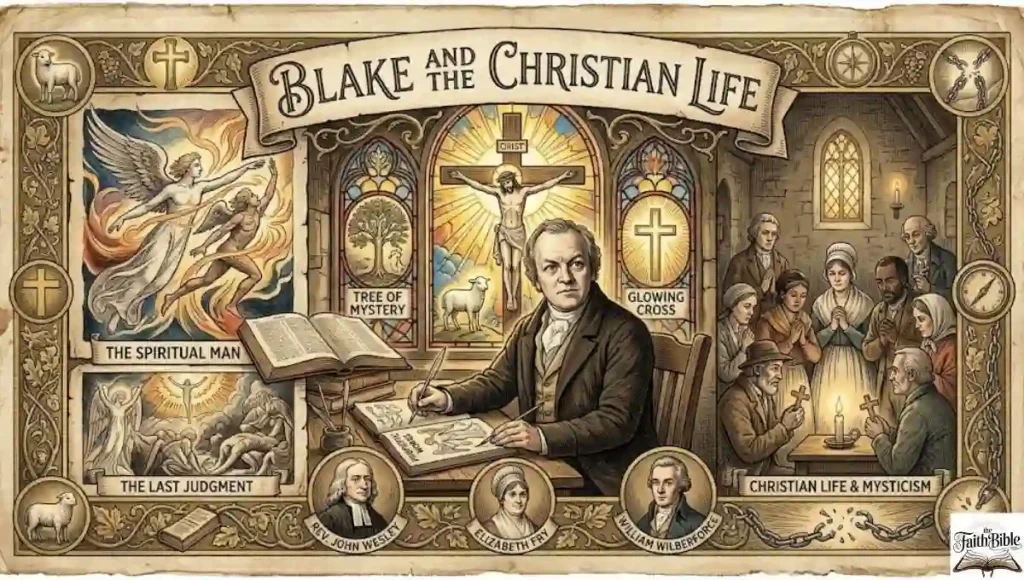
The Blake name meaning in Christian life is most powerfully expressed not in theological abstraction but in the daily rhythms of discipleship. The dual meaning of the name Blake — dark and light — mirrors the dual reality every believer navigates: the lingering pull of the old nature and the liberating call of the new identity in Christ. This tension is not a failure of faith; it is the honest description of what it means to live between what we were and what we are becoming.
The Christian view on the name Blake sees this tension not as a burden but as a gift — a built-in spiritual accountability that keeps believers both humble about their past and hopeful about their future in God. Paul describes this perfectly in Romans 7–8, where he openly wrestles with the conflict between darkness and light within himself before arriving at the triumphant declaration: “There is now no condemnation for those who are in Christ Jesus” (Romans 8:1).
“For you were once darkness, but now you are light in the Lord. Walk as children of light — for the fruit of the light consists in all goodness, righteousness, and truth.”
— Ephesians 5:8–9 (NIV)
- Daily Devotion:Thename Blakeis a daily invitation to begin each morning in God’s Word and prayer — actively choosing the light of Scripture over the darkness that surrounds us.
- Authentic Witness:Bearing a name that contains both darkness and light is a powerful testimony — the story of personal transformation through Christ is the most compelling evidence for the truth of the gospel.
- Sanctification Journey:Thespiritual growth and transformationimplied by thename Blakereminds believers that growing in holiness is a lifelong process requiring daily surrender to God’s Spirit.
- Integrity in Living:Walking in the light means choosing transparency, honesty, and righteousness over hiding, deception, and compromise — a calling thename Blakemakes concrete and personal.
- Compassionate Ministry:Those who understand what it is to come from darkness are uniquely equipped for compassionate, patient ministry to those who still walk in it — making thefaith-based meaning of the name Blakemissional as well as personal.
A Broader Reflection on Light and Darkness
The light versus darkness in the Bible is not merely one theme among many — it is the overarching narrative framework of the entire scriptural story. From the very first act of creation to the final vision of God’s eternal kingdom, the Bible consistently uses these two realities to describe everything that matters most: the nature of God, the condition of humanity, and the transformative power of redemption through Jesus Christ.
- Genesis 1:3–4— “God said, ‘Let there be light,’ and there was light. God saw that the light was good, and He separated the light from the darkness.” The very first creative act of God was to speak light into darkness — the foundational pattern that thename Blakespiritually embodies.
- Psalm 119:105— “Your word is a lamp to my feet and a light to my path.” God’s Word is the active, living light that guides believers through every dark season — the practical application of thefaith-based meaning of the name Blakein daily Christian life.
- John 8:12— “I am the light of the world. Whoever follows me will never walk in darkness, but will have the light of life.” Christ’s definitive self-declaration is the source and summit of allovercoming darkness Bibleteaching — and the ultimate fulfillment of what thename Blakepoints toward.
- Romans 13:12— “Put aside the deeds of darkness and put on the armor of light.” Paul’s call to urgent, active, light-filled Christian living resonates perfectly with the spiritual calling embedded in thename Blake.
- Revelation 22:5— “There will be no more night. The Lord God will give them light.” The eternal finale of the biblical story is the complete, permanent triumph of light over darkness — the ultimate destination of the journey thename Blakesymbolizes from its very roots.
The Grand Biblical Narrative
The biblical meaning of modern names like Blake finds its deepest grounding in this grand narrative. The Bible begins with God separating light from darkness, and ends with darkness abolished forever in God’s eternal presence. The name Blake, carrying both within it, stands at the very center of this story — reminding every believer that they live between the darkness of the old world and the light of the world that is coming, called to shine brightly in the space between.
The Spiritual Significance of Names in the Bible
The question of why names are important in the Bible unlocks an entire dimension of scriptural understanding that makes the Blake name meaning biblical exploration so worthwhile. Across both Testaments, names in Scripture function as far more than personal identifiers — they are declarations of character, destiny, covenant relationship, and God’s redemptive purpose for a person’s life.
- Abram to Abraham (Genesis 17:5)— God changed Abram’s name to Abraham (“father of many nations”) to declare His covenant purpose before it was physically fulfilled. The new name preceded the new reality.
- Jacob to Israel (Genesis 32:28)— After wrestling with God through the night, Jacob received the name Israel (“he who struggles with God”), marking his transformation and the beginning of a new chapter in his spiritual identity.
- Simon to Peter (John 1:42)— At their very first meeting, Jesus renamed Simon as Cephas (Peter, meaning “rock”) — speaking his transformed identity over him before it had been achieved, as an act of prophetic grace.
- Saul to Paul (Acts 13:9)— The shift from Saul (his Hebrew persecutor identity) to Paul (his Gentile-missionary identity) marked the completed transformation from darkness into light — the most Blake-like name change in all of Scripture.
- Naomi to Mara (Ruth 1:20)— Naomi asked to be called Mara (“bitter”) after her losses, demonstrating how deeply names in Scripture were always tied to the actual lived spiritual experience and personal testimony of the individual bearing them.
| Biblical Figure | Name Change Reference | Spiritual Significance |
| Abram to Abraham | Genesis 17:5 | Covenant identity declared — purpose named before fulfillment |
| Jacob to Israel | Genesis 32:28 | Transformed through encounter with God — new identity sealed by struggle |
| Simon to Peter | John 1:42 | Character and calling spoken over him by Christ at first meeting |
| Saul to Paul | Acts 13:9 | From darkness (persecutor) to light (apostle) — the defining Blake-like transformation |
| Naomi to Mara | Ruth 1:20 | Names reflect lived spiritual testimony — dark seasons acknowledged honestly before God |
Each of these biblical name stories reinforces the principle that God’s purpose for names runs far deeper than identification names declare identity, mark transformation, and carry covenant meaning. The name Blake, though modern in its usage, participates in this ancient, sacred tradition. Its dual meaning of dark and light tells a story that is fundamentally biblical. The story of every human soul that has ever been transformed by the grace of God.
FAQs
Is the name Blake found in the Bible?
The name Blake does not appear directly in Scripture, but its dual meaning of darkness and light aligns perfectly with the Bible’s most central and repeated spiritual themes of transformation, redemption, and identity in Christ.
What does the name Blake mean spiritually?
The spiritual meaning of Blake represents the transformative journey from spiritual darkness into God’s light. The core gospel experience of salvation, renewal, and living as a child of light in Christ.
Does the name Blake have biblical symbolism?
Yes, The name Blake carries rich biblical symbolism through its Old English roots meaning both “dark” and “bright,” connecting directly to Scripture’s profound, repeated theme of God’s light overcoming every form of darkness.
Is Blake a Christian name?
The name Blake is widely and meaningfully embraced as a Christian name because its spiritual symbolism of darkness-to-light transformation reflects the central biblical narrative of every believer’s life in Jesus Christ.
What biblical lesson does the name Blake represent?
The name Blake teaches that God transforms every soul that comes to Him from darkness into radiant light, calling each believer to walk in truth, shine before others, and live purposefully in their God-given identity in Christ.
Conclusion
The biblical meaning of the name Blake is a profound and layered spiritual truth. A name born from the tension between darkness and light that mirrors the complete arc of the Christian faith, from creation to salvation to eternal glory with God.
The spiritual meaning of Blake reminds every believer that transformation is not just possible but is God’s very purpose for every soul He touches, moving us from the darkness of sin and separation into the blazing, unquenchable light of His presence, love, and redemptive grace.
For Christian families and believers drawn to the Blake name meaning biblical depth, there is no shortage of spiritual richness to draw from: it speaks of redemption, identity in Christ meaning, the call to shine, and the enduring power of God’s light over every shadow the world can cast.
Ultimately, the meaning of Blake in Christianity is a daily declaration of the gospel. A name that says, in its very roots, that darkness has been defeated, the light has come, and those who bear it are called to carry that same transforming light into every corner of the world around them.